Choosing the Right Vehicle Service Schedule
Why Following the Correct Maintenance Schedule Matters ?
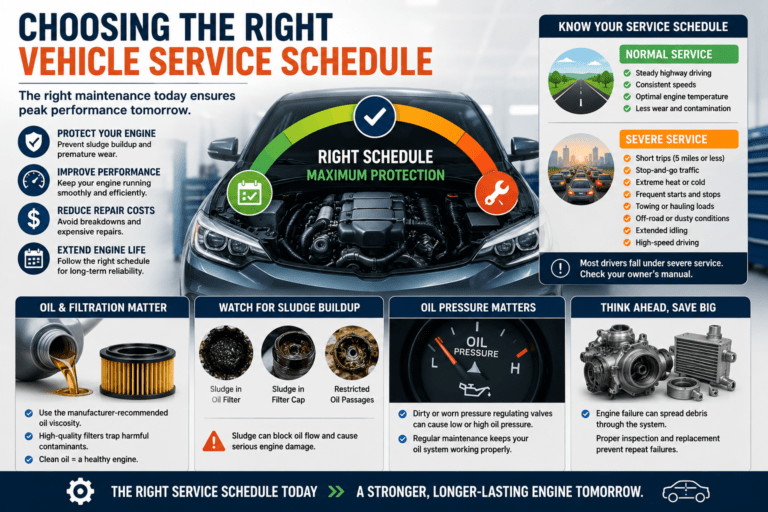
Many vehicle owners focus on fuel efficiency, performance, and appearance but often overlook one of the most important factors in vehicle ownership—routine maintenance. Following the correct service schedule is essential for protecting your engine, maximizing performance, and avoiding costly repairs.Ignoring recommended service intervals can lead to the buildup of sludge, dirt, and harmful deposits inside the engine. Over time, these contaminants restrict oil flow to critical engine components, causing excessive wear and increasing the risk of engine failure.
The Hidden Dangers of Poor Maintenance
When oil changes and inspections are delayed, several problems can develop inside the engine:Sludge accumulation can block the oil pump pickup screen, reducing oil circulation.Breather and oil return passages may become restricted.Valve train components can become coated with thick deposits.Oil flow to camshaft control systems may be reduced.Fuel management components can malfunction due to inadequate lubrication.Oil pressure irregularities may occur because of sticking pressure-regulating valves.Oil filters can become clogged, reducing filtration efficiency and engine protection.If sludge is visible in the oil filter or filter housing, similar contamination is likely present throughout the engine's lubrication system, including the oil pan, cylinder heads, and valve train components.
Understanding Vehicle Service Schedules
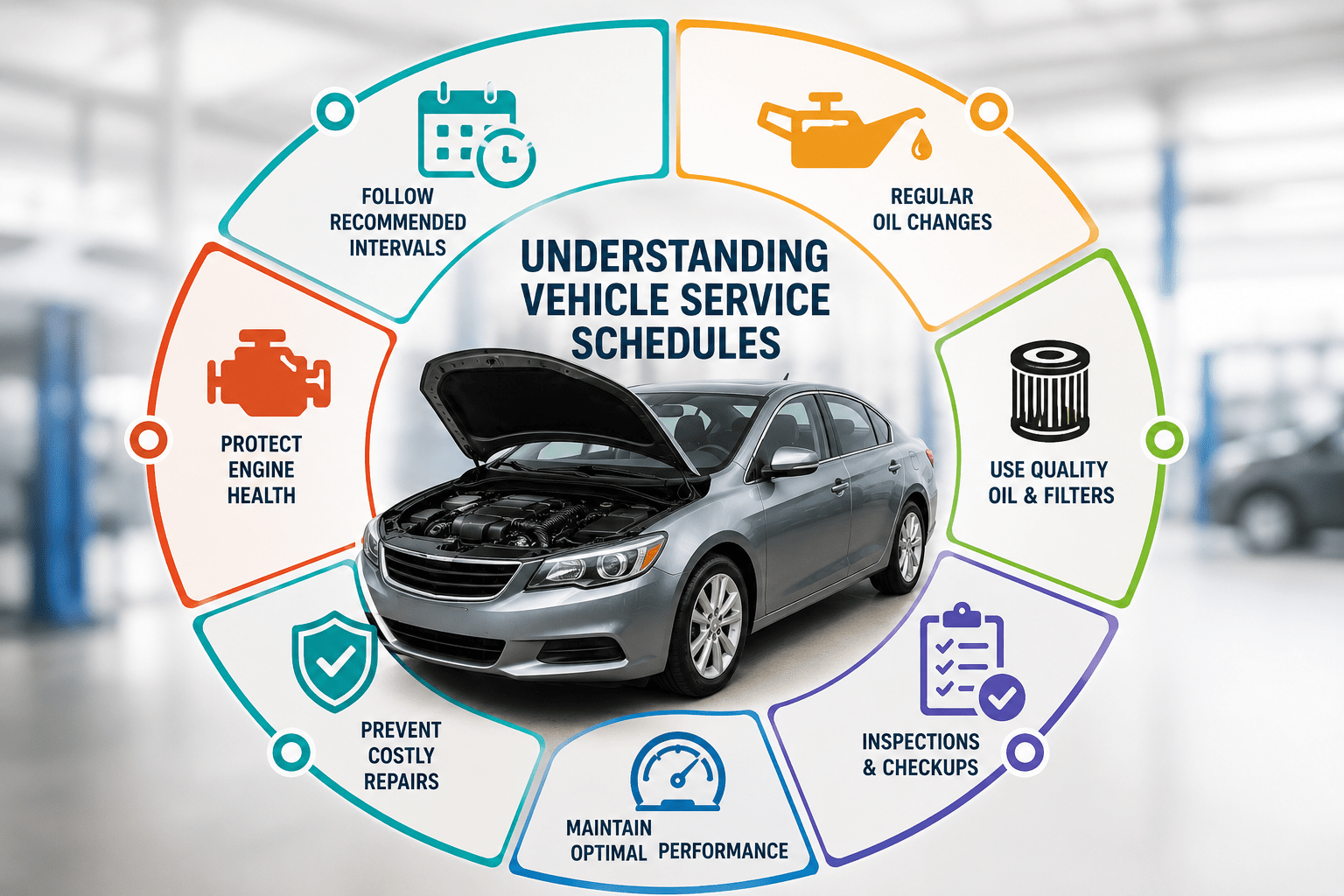
Modern engines are designed with advanced technologies, high-performance lubricants, and improved filtration systems. These innovations allow manufacturers to recommend longer service intervals than in the past.However, many vehicle owners mistakenly assume they operate their vehicles under normal driving conditions. In reality, most vehicles fall under the severe service category, requiring more frequent maintenance.Choosing the correct service schedule depends largely on how the vehicle is used.
Normal Service Conditions
A vehicle generally qualifies for normal service when it is regularly driven at steady highway speeds for extended periods. Under these conditions:The engine reaches optimal operating temperature.Fuel contamination is minimized.Oil remains cleaner for longer periods.Internal engine wear is reduced.
Modern engines are designed with advanced technologies, high-performance lubricants, and improved filtration systems. These innovations allow manufacturers to recommend longer service intervals than in the past.However, many vehicle owners mistakenly assume they operate their vehicles under normal driving conditions. In reality, most vehicles fall under the severe service category, requiring more frequent maintenance.Choosing the correct service schedule depends largely on how the vehicle is used.
Severe Service Conditions
Most drivers actually operate under severe service conditions without realizing it. Vehicles should follow a more aggressive maintenance schedule if they experience any of the following
:1. Frequent Short TripsDriving less than 5 miles at a time prevents the engine from reaching full operating temperature. This encourages moisture buildup and sludge formation.
2. Heavy Traffic and Hot WeatherStop-and-go driving in high temperatures places additional stress on the engine and lubricants.
3. Cold Climate OperationRegular trips under 10 miles in freezing temperatures can increase engine contamination and wear.
4. Extended IdlingVehicles such as taxis, delivery vans, fleet vehicles, and law enforcement units often spend long periods idling, accelerating oil degradation.
5. Dusty or Off-Road Dr- iving Dust and debris can contaminate engine systems and increase filtration demands.
6. Harsh Road Conditions - Driving on muddy, sandy, rough, or salt-treated roads increases vehicle wear and maintenance requirements.
7. High-Speed Driving - Continuous operation at higher-than-normal highway speeds places additional demands on engine components.
8. Towing and Hauling - Pulling trailers, boats, campers, or heavy loads generates additional heat and stress
.9. Frequent Stops and Starts - Urban driving with constant acceleration and braking accelerates engine wear compared to steady highway driving.
The Role of Oil Pressure Regulating Valves
Oil pressure regulating valves help maintain consistent lubrication throughout the engine. Even small amounts of sludge, dirt, or metal particles can interfere with valve operation.A stuck valve can create serious problems:Low oil pressure can starve engine components of lubrication.Excessive oil pressure can damage seals, gaskets, and filters.Common causes include:Oil pump wearSludge buildupForeign debris contaminationMetal particles from component wearImproper oil viscosityAir filtration issues allowing contaminants into the engineRegular maintenance significantly reduces these risks.
Important Considerations During Engine Replacement
When an engine suffers bearing failure, metal debris can circulate throughout the entire lubrication system. Even after replacing the engine, residual contamination can damage the new unit.Components that may require replacement include:Oil coolersOil cooler linesOil reservoirsTurbochargersRelated lubrication system componentsProper inspection and cleaning of the lubrication system are essential to prevent repeat failures and protect the investment in a replacement engine.
Final Thoughts
One of the most effective ways to protect your vehicle is by following the correct maintenance schedule based on your actual driving conditions—not just the mileage shown on the odometer.Most vehicles operate under severe service conditions and require more frequent inspections and oil changes than many owners realize. Regular maintenance helps prevent sludge buildup, maintains proper lubrication, improves engine performance, and significantly reduces the risk of costly repairs.A small investment in preventive maintenance today can save thousands in repair costs tomorrow while ensuring your vehicle remains reliable for years to come.